
With all major US export-oriented drug manufacturing plants in the country up for inspection in 2022, some estimates peg that at least 20-30 per cent of the new product launches lined up for the US will be subject to on-site inspection by the US Food and Drug Administration (USFDA). The last two years saw limited physical inspections due to travel restrictions during the pandemic. "Pre-Covid, the frequency and number of inspections of manufacturing plants in India by USFDA had increased significantly," analysts from ICICI Securities Research noted. "With growing ANDA filings, especially for complex products. "We expect this trend to return with the environment normalising," analysts from ICICI Securities Research noted.

An analysis of WHO data shows that most of the countries with an older cohort of population and higher in the development index had a lower excess mortality rate than India.
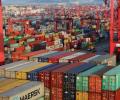
Shipments from Russia rose nearly 33 per cent to $1.1 billion in March from $831.17 million in the previous month, which was when the country mounted aggression on Ukraine and faced sanctions from Western nations, the data accessed by Business Standard shows. Growth in imports was largely on account of oil, people aware of the matter said. The Department of Commerce is learnt to have written to the Ministry of Petroleum and Natural Gas (MoPNG), seeking details of imports, including the payment mechanism, which India has not made public.

'A patient visits for any other treatment, but a routine Covid test finds him to be positive.' 'Not only are they, but their whole family is also coming out to be positive.'
Indian drug firms get a shot in the arm in the $12 bn Australian drug market as the Therapeutic Goods Administration (TGA), Australia agrees to accelerate the drug approval process in that country for Indian players who already have an approved plant and product from one of the stringent regulatory authorities like US, EU or Canada. From current sales of $340 mn, the Indian firms can see a significant upside in sales; felt Dinesh Dua, former chairman of the Pharmaceutical Exports Promotion Council of India (Pharmexcil), and the MD of Nectar Lifesciences. He highlighted that only 12 percent of the Australian drug market is generic, as against 80-90 per cent in the US or EU. Of this $1.5 bn generic drug market in India, Indian companies have a small share.

This will be done across five cities - Delhi, Bengaluru, Coimbatore, Bhopal, and Shillong. Thereafter, it will be scaled up and launched in 100 cities over a period of six months, said a senior government official.

Nepal's decision to ban the import of non-essential items amid depleting forex reserves may hit Indian exports. The country's central bank - Nepal Rastra Bank - last week instructed commercial banks not to open letters of credit (LCs) for importing non-essential items. This is to prevent further decline of the country's foreign exchange reserves. However, it has not issued any formal communication yet.

The Centre is unlikely to announce an agreement over payment mechanism with Russia until a ceasefire is declared in the Ukraine war, said people in the know. An inter-ministerial group headed by the finance ministry has been meeting regularly for over a month to analyse and discuss payment mechanisms that can work under the current circumstances and ensure the trade between India and Russia is not disrupted. The US had recently said that there would be consequences for countries actively attempting to "circumvent or backfill" American sanctions against Russia.

Sources close to the development said the company had no further supply commitments to the WHO, and therefore, there was no suspension of any upcoming orders, reports Sohini Das.

Sources indicated that there were no fresh orders from the Government of India, and their supply commitments have ended as of March 31, reports Sohini Das.
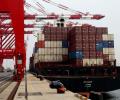
Economic recovery from the pandemic in the US has helped India achieve the $400-billion mark for exports for the first time in any fiscal year. According to the preliminary data compiled by the Department of Commerce, India exported goods worth $73 billion to the US from April 1 to March 21 - up 47 per cent, compared to last year. The US' share of exports, compared to total exports, stood at 18.2 per cent. The country is also India's largest trading partner and export destination.

No expecting mother ever needs to travel for more than 30 minutes to reach one of their hospitals, believes the Cloudnine group.

With intermittent disruptions in the supply chain of raw materials from China, the Indian pharma industry has braced itself with bigger inventory. Even smaller drug makers are now carrying a month of buffer stock of key raw materials, said industry insiders. The lockdown in various Chinese provinces, including Shanghai, is likely to delay shipments by two weeks to a month, said domestic players. Shipments are critical for the Indian drug industry, which imports 70 per cent of its raw material from China.
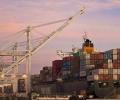
Exporters are readying back-up routes to send their shipments to the nations belonging to the Commonwealth of Independent States (CIS), including Russia, as the war in Ukraine continues to intensify. Three routes are being explored. The first is the China route using Qingdao port. The second is the International North-South Transport Corridor (INSTC) route that connects Mumbai to Moscow via Iran and Azerbaijan.

India is looking to develop alternative export markets for tea such as Iraq, Saudi Arabia, the US, Japan and Tunisia in view of the Russian invasion of Ukraine, people aware of the matter said. Meetings are being held with buyers in some of these countries in virtual mode, with the help of diplomatic missions located there. Similar meetings for the remaining countries have also been planned.

India's exports are unlikely to get an immediate boost from a depreciating rupee, which touched an all-time low on Monday, driven by rising commodity prices. The rupee fell to 76.97 against the dollar earlier in the day, settling 1.05 per cent weaker than the previous close. Oil prices soared to their highest since 2008 on Monday at $139 per barrel, after the US and European allies explored a Russian oil import ban, while delays in the potential return of Iranian crude oil to global markets increased supply fears.

The apparel and engineering sectors have already witnessed the trend in the past one week. If this continues, it can have an impact on the overall export demand in the coming months, considering that Europe is the largest national export market for India.
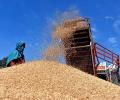
India is looking to tap its diplomatic missions abroad to enable grain exporters in the country to ship out wheat and corn as supplies from Russia and Ukraine are expected to remain disrupted for some time to come. Between the two items, pushing for wheat is easier because of a huge domestic surplus. "We are hand holding our exporters and support from various Indian missions abroad is also being channelised accordingly," a senior government official said. Global wheat prices have jumped since the Ukraine crisis started, with wheat futures in the US reaching their highest levels since 2008.

The government may soon give the green light to bilateral trade between Russia and India in their national currencies to avoid any trade disruptions, multiple people aware of the matter said. While the Department of Commerce has recommended the proposal, an announcement is likely to be made by the finance ministry after further deliberations between the Department of Economic Affairs and Department of Financial Services. "The finance ministry will take a call on how to peg the two currencies," a senior government official told Business Standard. In the past, the two nations have had rupee-rouble trade, and when such an arrangement is implemented again, it will bypass the sanctions imposed on Russia by the West.

Stocks of Indian companies with exposure to Europe fell on Tuesday amid concerns about the impact on their sales in case the Russia-Ukraine crisis worsens and the US and its allies impose economic sanctions on Russia. While top conglomerates, including Reliance Industries, the Tata group, and Aditya Birla Group, said they did not have any significant exposure to Russia, executives of some of the oil and gas, pharmaceutical, and tea companies said they were monitoring the situation closely as they earned substantial income from the region. Russian President Vladimir Putin on Monday ordered troops into two breakaway regions of eastern Ukraine after announcing that Russia would recognise their independence.
 © 2026 Rediff.com - Advertise with us - Disclaimer - Privacy Policy - Sitemap - Feedback - About us - Terms of use - Grievances